Dean's Message

An Academic Vision Towards Excellence and Innovation

In the Name of Allah, the Most Gracious, the Most Merciful

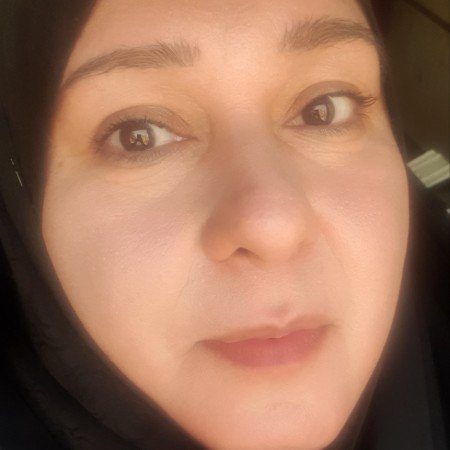
In the Name of Allah, the Most Gracious, the Most Merciful. All praise is due to Allah, Lord of the worlds, and peace and blessings be upon the noblest of His creation, Muhammad, and upon his pure, immaculate, and infallible household. Whoever is admitted to the College of Education at Al-Zahraa University (peace be upon her) for Women will experience academically enriching and enjoyable years. The dedication of the College’s staff is itself a source of fulfillment, as it stems from sincere intentions and a genuine passion for their mission. Consequently, our faculty members continuously strive to enhance their academic output and professional excellence. The College adopts e-governance in its administrative operations to ensure efficiency and expedite procedures and communications among departments and units. Faculty members deliver curricula that incorporate the most up-to-date knowledge and experiences comparable to leading institutions worldwide. In addition, they instill in students the values, principles, and noble ethics of Lady Al-Zahraa (peace be upon her), embedding them as integral components of their character and conduct. The College comprises six departments: Mathematics, Arabic Language, English Language, Special Education, Art Education, Nahj al-Balagha, and Islamic Education. The Bachelor’s program spans four academic years. The annual system is followed in the Departments of Arabic Language, English Language, Art Education, Nahj al-Balagha, and Islamic Education, while Mathematics and Special Education operate under the semester system. During the fourth year, students complete a 40-day practical training placement in intermediate and secondary schools—both public and private—across all governorates of Iraq. Through its Appointments Committee, the College carefully selects the most qualified faculty members and ensures the adoption of the latest globally recognized curricula. To maintain openness and academic engagement with peer institutions, the College has established memoranda of cooperation with the Faculties of Science and Arts at Al-Zahraa University in Iran, as well as with the Departments of Arabic, English, and Mathematics at the University of Milan in Italy. The College provides an electronic library granting students and faculty access to authoritative reference and curricular resources. To facilitate continuous communication beyond official working hours, each course is supported by an online classroom platform through which instructors respond to inquiries, conduct daily assessments, deliver lectures, and share beneficial links and academic resources. The College regularly organizes training courses in teaching methodologies for secondary school educators, in addition to specialized academic development programs. It hosts committees dedicated to Quality Assurance and University Performance, Accreditation and Scientific Publication, Educational and Psychological Guidance, Electronic Administration, and Practical Training. Each committee operates at the institutional level and is supported by corresponding subcommittees within the academic departments. Committed to integrating modern technology into education, the College offers seven workshops monthly on contemporary topics within its fields of specialization, many of which are conducted in collaboration with counterpart departments at Iraqi and Arab universities. The College’s vision is to be a Fatimite institution standing at the forefront of knowledge within its disciplines. Its mission is inspired by the Qur’anic principle: “Purifying them and teaching them the Book and wisdom.” Just as fertile land must first be cleared of weeds and harmful elements before cultivation, students must first be nurtured with the values of Lady Al-Zahraa (peace be upon her) and the ethics of the Holy Qur’an, after which knowledge is planted to grow strong, flourishing, and beautiful. The Deanship of the College of Education at Al-Zahraa University (peace be upon her) for Women takes pride in bearing the name and embodying the values of Lady Al-Zahraa (peace be upon her). It affirms that its faculty members, staff, and students constitute the vibrant heart of the College, and it remains steadfast in its commitment to delivering contemporary education aligned with modern technological advancements. Prof. Dr. Iman Samir Bahiyya

May Allah grant you all success, and we ask Allah to make our university a beacon of knowledge and virtue.
Prof.Dr. Iman Samir Abd Ali Baheya

Dean of College

Latest News and Activities

Latest news and events at the college

Academic Departments

Explore the academic specializations available at the college

English Language Department

The English Language Department is a humanities department that focuses on studying language as a means of communication, thought, and culture. The department emphasises developing students' reading, writing, listening, and speaking skills in English, along with the study of English and American literature, including both classical and modern texts, and places particular emphasis on the educational and pedagogical aspects of secondary school education.
More About Department

Department of Arabic Language

The Department of Arabic Language represents a model of academic excellence within the Faculty of Education. Established in the 2019–2020 academic year, it operates under the University’s “single-department” policy. All members of the teaching staff contribute to its programmes, which are based on an integrated academic programme that keeps pace with modern electronic technologies and undergoes periodic development to meet the needs of society and enhance educational outcomes.

More About Department

Department of Mathematics

The Department of Mathematics at the Faculty of Education, Al-Zahraa University for Women, was established in 2018 under Ministerial Order No. (2189) dated 6 December 2018. The department is committed to providing high-quality education and implementing academic accreditation standards to graduate distinguished female students who can contribute effectively to the development of Iraq. The department is chaired by Lect. Dr. Yaseen Mirza Hamza, who supervises both academic and administrative activities to achieve the department’s objectives. The department seeks to promote qualitative and quantitative development in scientific, educational, and cultural knowledge. Additionally, the study system is semester-based and extends over four academic years.

More About Department

Department of Art Education

The Department of Art Education plays a fundamental role in developing female students’ intellectual, psychological and creative capacities. Established in the 2024–2025 academic year, the Department operates under the University’s single-department policy, with all teaching staff contributing to its programmes. The Department adopts an academic programme encompassing artistic, intellectual, emotional and social dimensions, drawing on the principles of global culture. It embraces the view of art as a branch of the humanities concerned with the nature and development of human life, while advancing towards the concept of digital art education, which incorporates digital technologies, including cyber art and its applications, as a foundation for teaching art education in a manner that reflects contemporary developments. This approach is reflected in both the curriculum and the behaviours associated with its content, and is manifested through sensory perception, verbal information, comprehension, analysis, criticism, measurement, evaluation, appreciation and artistic production.

More About Department

Department of Special Education

The Department of Special Education is dedicated to preparing specialised educational professionals capable of working with individuals with special educational needs by equipping them with theoretical and practical knowledge, enabling them to assess and diagnose cases, and design individualised educational programmes. This contributes to their integration into society and helps them achieve the highest possible level of independence.

More About Department

Department of Nahj Al-Balagha and Islamic Education

The Department of Nahj Al-Balagha and Islamic Education at Al-Zahraa University is a specialised academic department that combines the study of Imam Ali's (peace be upon him) methodology in Nahj Al-Balagha with its application in various Islamic and educational sciences. The department also offers diverse courses including the interpretation of Nahj Al-Balagha, Islamic thought, theology ('Ilm Al-Kalam), applied rhetoric, Qur'anic sciences, and other subjects that connect Islamic heritage with contemporary reality. The programme focuses on studying Imam Ali's (PBUH) educational, ethical, and intellectual methodology and extracting its lessons and applications across different scientific fields. Additionally, the department aims to prepare specialists capable of understanding the depth of Nahj Al-Balagha and .connecting it with other Islamic and human sciences. It also seeks to graduate researchers and educators who employ Imam Ali's (PBUH) teachings in education, teaching, and community service

More About Department

College Vision, Mission, and Goals

Comprehensive Information About the College

Faculty Overview

The Department of English Language is one of the core academic departments at the College of Education, Al-Zahraa University. It aims to prepare qualified female teachers of English who possess strong linguistic competence and solid pedagogical skills, in line with the requirements of modern educational practices. The department focuses on developing students’ abilities in the four fundamental language skills: listening, speaking, reading, and writing, in addition to the study of English literature, linguistics, and methods of teaching English. These subjects are delivered through well-designed academic curricula that adhere to recognized educational standards.

Faculty Vision

Excellence and leadership among Colleges of Education locally and internationally, through pioneering learning, teaching, scientific research, and community service in the light of modern technologies.

Faculty Mission

1. Preparing a Fatimid-inspired teacher in accordance with contemporary technological developments. 2. Developing the capabilities of academic staff and administrative personnel in line with modern technologies. 3. Establishing effective partnerships with the local community. 4. Advancing and strengthening the scientific research system.

Faculty Strategic Objective

First: Goals Related to Students • Training students to use modern technologies to create an appropriate learning environment. • Enhancing students’ ethical and religious values. • Developing students’ social skills to communicate effectively with the local community. • Promoting scientific thinking skills among students. Second: Goals Related to Academic Staff 1. Enhancing the academic and technological skills of faculty members. 2. Training faculty members to apply modern educational theories in teaching and learning processes. 3. Equipping faculty members with communication skills to collaborate with other colleges locally and internationally to gain up-to-date expertise. Third: Goals Related to Scientific Research 1. Encouraging faculty members to conduct joint scientific activities and research across various disciplines inside and outside the college. 2. Supporting excellence in scientific research and encouraging innovation. 3. Providing a stimulating and supportive environment for science and research within the college. Fourth: Goals Related to Community Service 1. Strengthening cooperation and integration with the Directorate of Education to improve teaching and learning processes for in-service teachers. 2. Providing consultations and studies that contribute to the development and modernization of teaching through effective partnership with the Ministry of Education. 3. Addressing educational challenges faced by society in general and educational institutions in particular through field-based studies. 4. Enhancing cooperation with other colleges of the university, their units, and faculty members to improve teaching and learning processes within the college.
Academic Staff

Elite of distinguished academic competencies in various specializations

Cooperating Universities – Memorandums of Understanding (MoUs)

Together towards academic excellence and joint cooperation to build a better future